

Why Choosing Art Is So Hard, And How Designers Can Make It Easier
Art is often the final layer in a project, but it’s also the one with the most invisible weight. Designers will tell me that they feel “stuck” choosing art, even when the rest of the design came effortlessly. There’s a reason for that. Art isn’t a single decision; it’s a convergence of aesthetic direction, style preference, emotional tone, subject matter, scale, palette, budget, client psychology, personal narrative, and that intangible sense of resonance that’s impossible to fake.
Art decisions are multi-dimensional and complex.
When you source a sofa, the variables are finite: material, scale, palette, cost. When you source art, you’re balancing hard design parameters with deeply personal, often unspoken emotional ones. You’re trying to find a piece that feels aligned with a space and aligned with a human being, and art is deeply subjective. That’s why art selection can feel like a moving target. The project has a mood, the clients have a mood, and the piece has a mood, and they don’t always agree.
Here’s what you’re actually navigating, whether consciously or not:
Aesthetic direction: The design language of the home sets guardrails, but art still has to push the room somewhere intentional.
Art style preference: Abstract, figurative, minimalist, maximalist, conceptual…every client has a bias, even when they don’t know it.
Subject matter: What imagery feels appropriate, grounding, or energizing for the space? And does it simultaneously speak to their values, priorities and personalities?
Emotional tone: Art changes the way a room feels more than any other layer. This is where alignment matters most.
Client personality: Are they decisive? Avoidant? Sentimental? Fearful of getting it wrong? This impacts the entire curation.
Narrative elements: What story does the home tell? What story does the client want to tell? Art is the bridge between the two.
Budget: The piece has to deliver emotional and aesthetic impact regardless of price point.
Dimensions + scale: Too small, and the room collapses. Too large, and it dominates the space.
Je ne sais quoi: That undefinable quality, the gesture, the tension, the quietness, the pull. The x factor that makes a piece feel right.
Timing, logistics, and availability: Especially with original works, and mid-career to established artists.
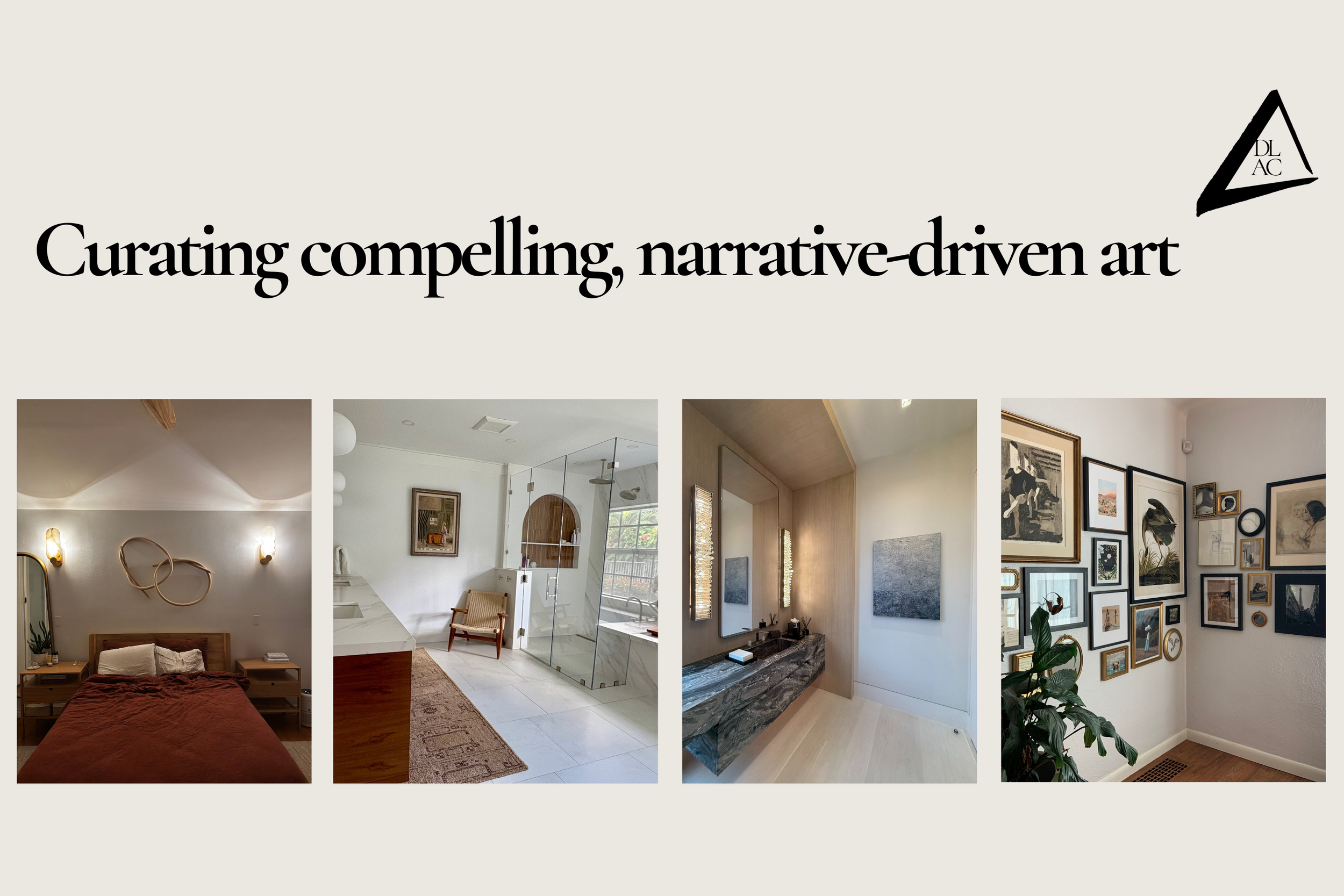
When designers feel overwhelmed by art, it’s not because they lack vision.
It’s because they’re trying to hold all of these elements at once, while also keeping the project moving, managing the client, and making a hundred other decisions. Most designers don’t have the time or mental bandwidth to do the deep work of curation on top of everything else.
That’s where an intentional, structured approach changes everything.
Instead of treating art like a final check-box, consider treating it like a parallel process. My approach to art is a blend of design logic, emotional intelligence, and client alignment. When we do that, art stops feeling like a gamble and starts feeling like an anchor. It can become the element that brings meaning, nuance, and coherence to the entire space.
My work sits in that intersection: understanding the client’s emotional and aesthetic patterns, translating the project’s design language into visual criteria, and sourcing pieces that feel both inevitable and alive. Designers often tell me, “This is the piece we didn’t know we were missing”, and that’s exactly the point. Art should resolve the space and deepen the client’s sense of connection, not simply fill a wall.
If you’re here because choosing art feels unnecessarily complex, or because you want a more intuitive, efficient, and emotionally resonant approach, you’re in the right place.
About Delia LaJeunesse Art Consulting
I believe that interiors are at their most meaningful when clients see themselves more clearly in the art they choose to live and work around. Art is where aesthetics and identity meet. A space comes into focus when the artwork reflects the tone, values, and emotional language of the people it’s meant for. My work is about translating intuition into form, helping clients choose art that feels grounded, resonant, and unmistakably theirs. I curate artwork that connects emotionally and contextually, bringing narrative, clarity, and intention into the spaces people inhabit.