

Rotating Your Art Collection
I recently wrote about slow living and art, and at the end of that article mentioned something about rotating your art collection.
Today I’ll share a few thoughts on why, and ways to go about it. Art holds the power to inspire, captivate, and transform our living spaces. But it can become static and mundane. Its impact can diminish over time.Rotating your art not only keeps your living spaces dynamic but also serves as a mindful approach to prevent materialism.
Let’s get into it.

Seasonality
I know some people get really into decorating for every season. I am really not into this. It encourages a maniacal materialism (because every season comes with a whole new trend you have to follow). And I frankly find it odd. The way our home looks, to me, is an extension of who we are, our personal brand, our style. Changing it based on holidays or seasons makes no sense to me.
And yet, I know that it is important to some people to recognize the seasons. And it’s important to me to! There are seasons for stillness and seasons for big energy. There are seasons for warmth and vibrancy, and seasons for cool and moody tones.
Rotating your art in accordance to these seasons, to your seasons, is an way to honor our changes throughout the year, and defy the endless more more more of trends.
Art as a Dynamic Experience
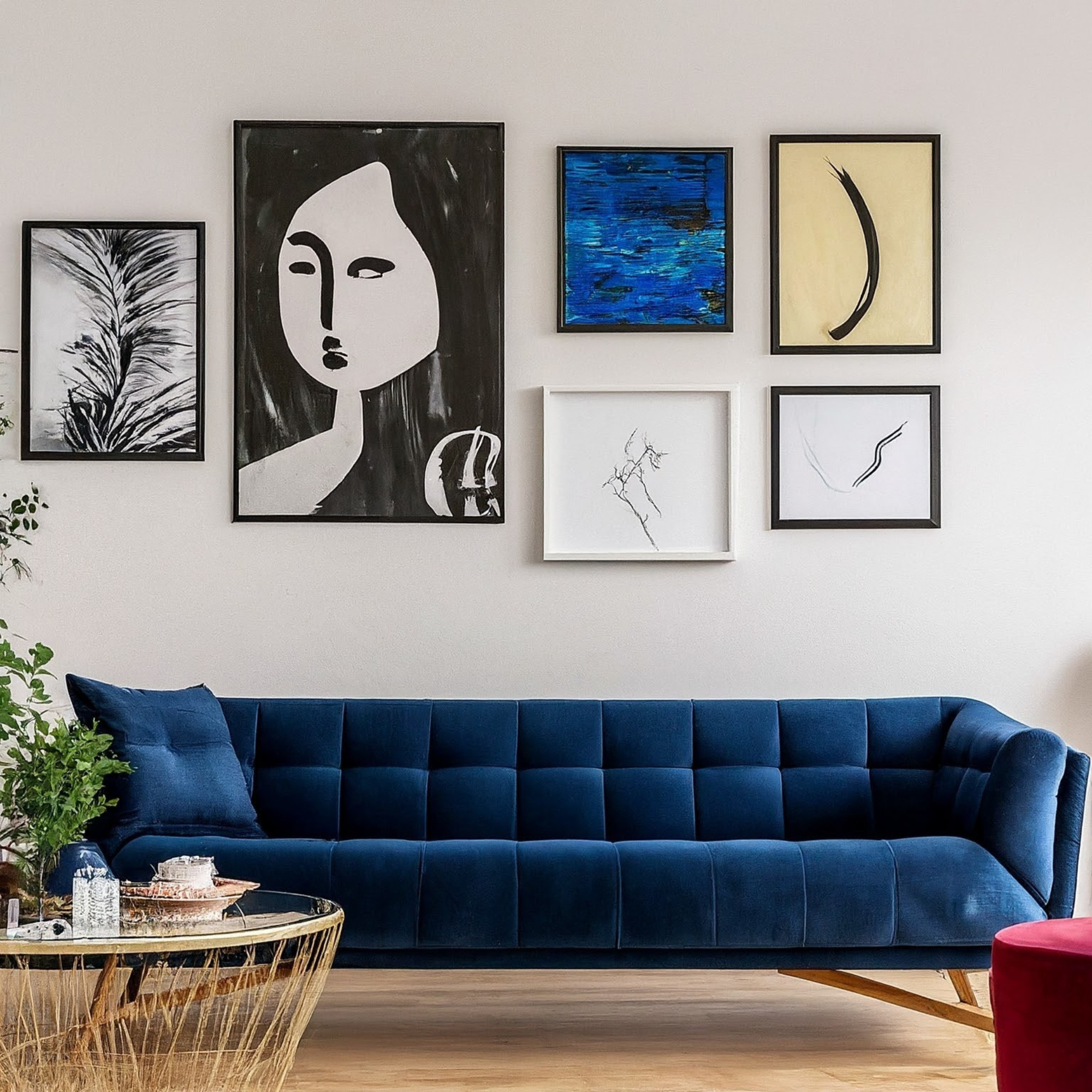
Art is more than a possession; it's a dynamic and evolving reflection of you, your interests, your internal landscape. By rotating your art, you breathe new life into your collection, fostering a continuous engagement with the pieces that surround you.
This can also serve as a yearly or biyearly opportunity to asses your collection as a whole, consider what has changed for you, what needs to be rebalanced, and how your art can support that.
Art fatigue is real.
If you don’t have practices of arts appreciation, your art very well may become mundane and lose its potency and impact on you. Bummer, because you probably spent some money on it. Just like our long term relationships with partners, family, friends, they need to be appreciated and not taken for granted. But unlike complex relationships, you can easily just swap it out.
Or rotate it. Pieces don’t have to go in storage, just try rearranging them, putting them in new rooms, creating unique pairings.
What I generally recommend when clients want to take this approach is to pick two seasonal rotations. Sprint and fall make the most sense to me personally. But find what works for you. Keep pieces in storage only temporarily. Make sure you store them well where they won’t get water damage, or eaten by mice or any other horror that comes in dark basements.
Mindful Consumption
I know I already talked about this but I think it’s so important. Shifting your focus from possessions to meaningful experiences is powerful. It’s about relationships and not ownership.
Rotating your art collection encourages a shift towards valuing the experience of art, fostering a deeper connection with the stories and emotions each piece conveys.
Rearranging is a great way to revive a space, and play with the narrative of your home. If you don’t want to put works in storage, just consider moving their location in your home. How does it change the feeling of it?
I grew up in a home where my mother would stay up late at night swapping the living room for the dining room. Plates would be moved on their shelves, paintings taken down and re-hung, the couch put at an angle. It created distinct phases in my mind and completely revived pieces that were hidden and under-appreciated.
By rotating your art display, you create the opportunity to fall back in love with a piece, and to cultivate a more intentional and thoughtful approach to collecting, which moves you away from the accumulation of possessions.
I speak a lot about the narratives told through our art collection. A part of that is how we move through our own spaces and consume art. What does this piece say, when put next to that piece? How does the conversation change if they order changes? These are interesting questions to me, that make our daily experience of our homes more vibrant and alive. What conversation is creating when piece A is placed next to piece B? How does that change if piece C is across the room from them? Etc. It’s all play you guys. Be light with it.
Thematic Rotation
Beyond the season rotation explored above, you can also rotate based on theme or emotion.
Group artworks based on themes or moods. This approach allows for a cohesive display that tells a narrative, creating a curated experience for both you and your guests.
Big fan of this for dinner parties. Did you read this article on art collections and being a better host?
How to Rotate Your Art Collection
Take down everything you’re willing to put away for a little bit.
Assess what you are needing right now. Do you want a new mood? Do you want to highlight the new paint color you chose? Do you want to revivify a space?
Play with unusual and surprising pairings. There are really no rules. I spread my art out on the floor and experiment with groupings.
Rotating your art collection is not just about changing what's on your walls; it's about fostering a dynamic and intentional relationship with the art you've chosen to surround yourself with. By actively engaging with your collection and curating different displays, you shift the focus from mere possession to meaningful experiences.
Wanting a bit of support? I can help you!