

How to become an art collector
There is a movement underfoot of a new culture of art collectors and you could join it.
Most people wait way too long to start an art collection, if they ever figure out how to start one at all. For most people who come to work with me, art feels foreign and difficult to navigate.
Here’s a really hot take really high in this article: The art world has failed. It has failed to effectively engage our culture in a way that feels relevant to our everyday lives.
But there is a wave of art collectors who are breaking out of the stuffy and elitist establishment of collecting. By doing this, they are elevating art that has the capacity to point our society to a beautiful future and are beginning to break down the fortress that the art world has become so art can truly be for the people.

This is a big deal, because the benefits of living with art are wide-reaching and worth paying attention to.
In this article I am going to provide you with everything you need to know to get past the discomfort, perceptions and fears that have been holding you back from experiencing art, and am going to tell you exactly how to join this movement, why you should make a commitment to becoming an art collector this year.
We live in a culture that is actively defunding the arts, that has discredited the role art plays in our personal and collective well-being. Wherever you’re at, whatever your experiences with art have been up to this point, know that it is because we are not taught how to appreciate and utilize art in the way we should be.
So take a breath, just recognize where you are, what you believe about art, what you believe about yourself and your ability to process and interpret art. This is a guide for you to access the resources you need to not only become an art collector where you get to live with gorgeous, meaningful art, but to also use the art in your home to lead a more enriching and fulfilling life.
Okay let’s get started.
How to get yourself comfortable with art.
People have a lot of stories about art. Art is triggering to a ton of people. We have all of these misconceptions about art, and it makes sense why we feel that way, art has become silo-ed in a super stuffy, academic and elitist world. It’s time to change that, which is exactly why I’m doing this work— to support my clients and students as they subvert the art world, and initiate a movement of new art collectors who are determined to do it differently.
But back to the heading up there. If you are going to collect art, you need to get comfortable with it. Like genuinely comfortable. Let me make this abundantly clear though… by comfortable I absolutely do not mean knowledgeable.
That actually bears repeating. You have to get comfortable with art to be an effective art collector. Getting comfortable does not mean studying art history, or knowing the lingo, or having a stack of notecards with dates and influences on it.
If you were thinking that it makes sense, that’s the way the art world seems. But that’s what we’re here to flip on its head because that is ridiculous. Let’s get you comfortable so that you can start a powerful collection today, and not after a Masters in art history.
To start, take stock of what you believe about art, and what you believe about your ability to interpret and understand art. Take a moment to properly reflect on this, write about it, acknowledge it. Once you’re clear on the beliefs you have going into this you can start to check them at the door and open yourself up to how transformative living with art actually is.
To get over whatever ick you might feel about art, and make it a natural component of your day to day life, you need to inundate yourself. You can do this gradually, in private, on basically any platform (social media, websites, books etc), or you can go to museums and galleries and shows. Just get a ton of exposure to art. And start to develop some clarity around what you like and what you do not like as you go.
If it helps, equip yourself with some practices or tools to better engage with the art. Here’s a video about a practice I love guiding clients through when they are uncomfortable with art.
Determine your style.
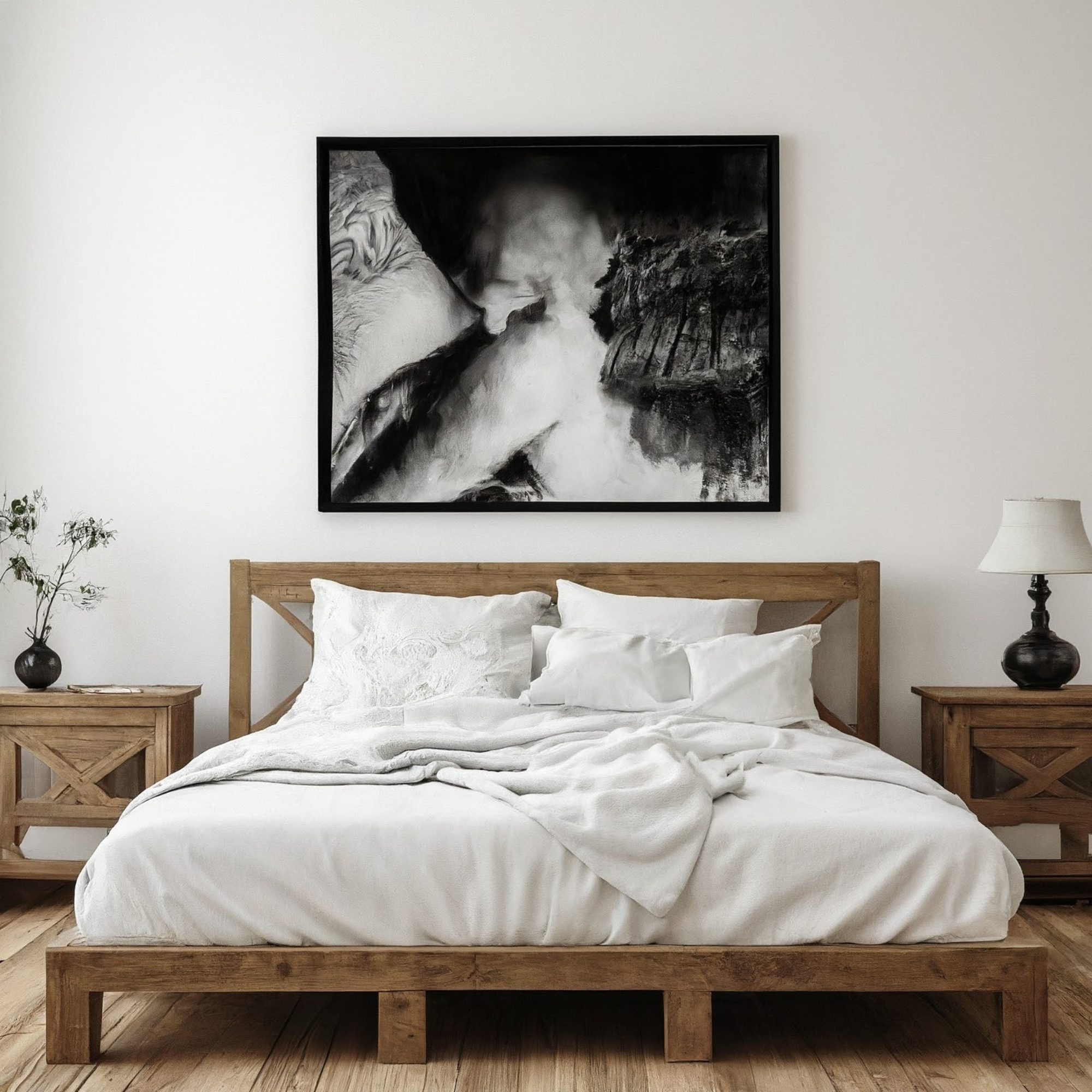
Once art starts to feel a little more common place, you’re going to clarify what speaks to you. Think theme, color, texture, subject, emotional response. Remember my interruption above about what I mean by comfortable? I HATE art jargon.
I fully reject the idea that you need to know any art history to become a collector. You do not need to have taken a single class, or know literally anything. Clarifying what speaks to you does not mean you need to learn a bunch of terms... or any terms.
Keep it straightforward: Do you like blue? Do you like bright pieces? Do you like chaos? Do you like sparse or minimal art? What do you like to feel when you look at art?
Everyone is different on that believe it or not, so name what you want to feel when you’re looking at the art in your home. Do you like when you can see the textures in a piece of art (think brush strokes, chalk build up, ink globs) or do you prefer the smooth style of photography or a print?
And while you’re working on that, list out what you don’t like as well. It’s just as important.
Just be sure before you do this that you’ve actually exposed yourself to a lot of art, and have a good data set to draw from.
Otherwise you run the risk of buying art for your collection that is trendy and that other people like, but that you might find a few months into owning it that it does absolutely nothing for you. That would suck. So take the time to inundate yourself with all different types of art and gauge your reactions and responses as you go.
Sadly, a truly personal style is a rare thing in our culture. We are kind of generic. But it’s magnificent when you can land on a style that is authentic to who you are and let your home carry that forward for you. When done well, a personal style helps you become the best version of yourself.
Oh and a fun little aside, when you have a clear sense of your personalized esthetic, your home is going to look super expensive.
The reasons there are two fold, owning art just looks classy and expensive (myths, but alas they are pervasive). Secondly when your art is highly personalized and connects to who you are and what you value, it looks like it was made custom for you. A true sign of of luxury interior design.
Develop a strategy.
Once you have a sense of what you like and dislike in art and are ready to consider your prospective art collection, it’s time to develop a strategy.
Having a strategy in place is necessary if you want a cohesive collection, and if you want to make smart buying decisions that lead you to pieces that remain relevant for your lifetime.
In my opinion, this is where interior design has fallen short.
It does not talk about art nearly enough, and it pushes individuals into an intense trend mindset that costs them thousands and fails to really acknowledge their full humanity. I don't know about you, but I’m kind of over materialism.
Your tailored strategy should look at what you want your art collection to represent. It should acknowledge the impact you want to have with your pieces. It should take into account your values and personality and aspirations. It should be directive but also malleable.
Use it as a guideline when making buying decisions.
If you would like help developing a personalized strategy you can schedule a free consultation with me here.
Be an art collector.
You’ve gotten yourself into a good headspace with art and know how to make informed decisions when beginning your collection because you know your style and your strategy is in place. You are ready to buy art.
You might already have places in mind to begin this process based on your period of exposure and inundation.
Finding art can be time-consuming and challenging but follow your strategy and your intuition (remember the question of how you want to feel?), and if you need a little more guidance on this front you can check out this resource I prepared for you.
It can be highly overwhelming to buy art on your own and hiring an art consultant, particularly one who will help you use the art you buy as a tool for personal development can be a really smart investment not only for your interior design, but also, and more meaningfully, for your own well-being and enrichment.
Schedule a consultation with me if you want to learn more about how my services can help you.
Being an art collector is more than owning art. It is acting as a steward to the arts. Art collectors have a powerful role to play in the shaping of culture, and the production of meaning. This is especially true when you are collecting work from emerging and mid-career artists.
These artists have a freshness about them that is highly energetic. Living artists who are actively responding to the world as they develop their practice, style and impact are charged.
When you become an art collector you are participating in an ancient and necessary role. Art collectors or patrons have been around for ever. Read more about that history here.
Just know that you are essential. You are funding and furthering the arts in a super critical way. And if you choose to think about yourself as an art collector, you can shape the future in a powerful way. I wrote a short article about that here if you want to read more.
Recap and integrating.
I hear the same concerns from people who come to work with me all the time.
They don’t know how to talk about art, or worse how to feel about art. They are overwhelmed by the prospect of navigating the art market. They don’t understand or connect with art.
And most painful, but definitely most common is that they have no idea how to use that art as a resource in their lives to lead more fulfilling, enriching and meaningful lives.
The positive news here is that all of those concerns relate to skills and practices that can be acquired. Pretty easily too! Yes, it takes time. Sometimes even a lot of time if you’re doing it alone. But when you want to join the fresh culture of art collectors that are making significant impacts on our society, all of this can be learned.
If you’d like to strategize your next steps to becoming an art collector, schedule a free call with me. We can discuss where you’re at in this moment, where you’d like to be, and I’ll advise you on the next few steps to get there.
There’s a lot more to discover. Here are some additional resources:
How having art in your home makes you a more interesting person
What it actually entails when you hire an art consultant
Ten profiles of a young art collectors
A common misconception about art collecting
Follow my instagram, I post a lot of educational videos on there. You can also check out my YouTube for home tours and in-depth resources.
I am here to serve you. Send me an email with you art collection questions.

Become an art collector. Delia LaJeunesse Art Consulting has designed offers to support the new collector, wherever you’re at. Get in touch with us.